










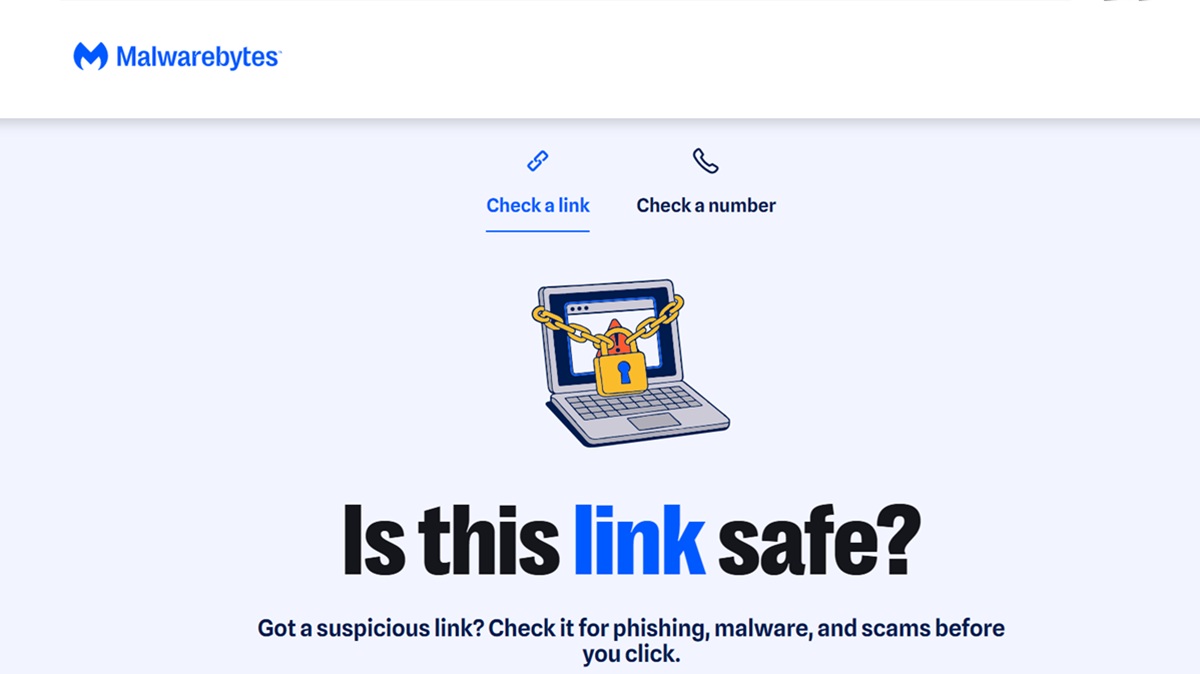
Malwarebytes launched the Malwarebytes Scam Link Check, a free web tool that lets anyone check whether a website link is safe or dangerous before clicking it. Users paste any suspicious URL, the kind that arrives by text, email, chat, or social media, and the tool returns a clear safety result in seconds, along with the reasons behind it and recommended next steps. Malwarebytes Scam Link Check is available now at malwarebytes.com/scam-check/link. It is completely free, no download, payment, or login required.
Scams have overtaken many traditional crimes in scale, with an estimated $442 billion lost to scams globally and roughly $21 billion lost by Americans alone in 2025. At the 2026 UN Fraud Summit, governments reported that cyber-enabled fraud run by organized crime now outweighs the global trade in weapons, drugs, and human trafficking combined. This is why Malwarebytes has committed to fighting scams and fraud with its anti-scam ecosystem.
Fake websites are the front door to much of that fraud. Malwarebytes research found that malicious websites such as phishing pages, counterfeit stores, and malicious ads, outnumber every other scam delivery method, ahead of email and text messages. Malwarebytes research also found that 85% of people say they can no longer reliably tell a scam from the real thing, up from 66% a year earlier.
“The thing most likely to drain your bank account today isn’t a virus. It is a link that looks like it came from your bank, a delivery service, or a friend,” said Mark Beare, Head of Consumer, Malwarebytes. “We’ve spent years asking people to become scam experts, and it hasn’t worked, because scams evolve faster than anyone can track. Instead, we flipped the model. Rather than asking people to spot the scam, we give them an expert. Paste the link, get a straight answer, and know what to do next—free, in seconds.”