











The UAE’s decision to transition half of all government services to AI-powered autonomous systems, announced during a meeting chaired by His Highness Sheikh Hamdan bin Mohammed bin Rashid Al Maktoum, represents one of the most ambitious national AI transformations in the world. The Higher Committee for Future Technology and Digital Economy framed this shift as a foundational step toward embedding AI into the country’s operational DNA. It is not merely a technological upgrade; it is a structural reimagining of how a nation functions.
The UAE is signalling that autonomous AI will not sit at the edges of society but will become the engine powering public services, economic competitiveness, and digital governance. This bold direction has sent a ripple across the Middle East, prompting enterprises to confront a new reality: AI agents are no longer experimental tools but operational actors capable of making decisions, executing tasks, and interacting with systems at machine speed. As organisations prepare for this future, the question is no longer whether to adopt AI agents but how to secure them before they become deeply embedded in critical workflows.
The rise of autonomous AI agents introduces a level of complexity that traditional security models were never designed to handle. These agents can access systems, process sensitive information, trigger actions, and interact with external content without human intervention. The shift from passive AI assistants to active digital workers creates a new class of operational risk. Many organisations have embraced AI for productivity, but few have adapted their governance frameworks to manage autonomous behaviour. This governance gap becomes more pronounced as agents scale across departments and applications. The UAE’s national direction amplifies this urgency, pushing enterprises to rethink identity, privilege, data access, and accountability in environments where decisions are made at machine speed. The challenge is not simply technical; it is architectural, operational, and cultural.

Acronis highlights this governance gap as one of the most pressing challenges. According to Ziad Nasr, organisations are moving quickly to automate workflows, customer interactions, and internal processes, but governance often lags behind. Nasr explains that AI agents introduce a new layer of operational complexity because they can autonomously access systems, process information, and trigger actions. As organisations shift from experimentation to deployment, questions emerge around visibility, accountability, access control, and oversight.
Acronis addresses these challenges through its GenAI Protection capabilities, which provide visibility into AI usage, identify shadow AI, and reduce the risk of sensitive information being exposed. Nasr emphasises that organisations must treat AI agents as part of the operational environment, not as isolated applications. This means establishing clear controls around identity, permissions, data access, and auditability. As enterprises prepare for environments where dozens or hundreds of agents operate simultaneously, Acronis stresses that security must shift from managing individual agents to governing how they interact and make decisions collectively.

AmiViz brings a complementary perspective, focusing on identity-first security. COO Ilyas Mohammed explains that customers face challenges around security, data privacy, governance, and regulatory compliance when adopting AI agents. Many organisations struggle with managing agent identities, controlling access to sensitive systems, and maintaining visibility into agent actions and decisions. Mohammed notes that building trust in autonomous decision-making, ensuring accuracy, preventing misuse, and managing operational risks are critical challenges that must be addressed before scaling AI deployments.
AmiViz addresses these issues through least-privilege access, continuous monitoring, and policy-based controls that prevent unauthorised actions. The company reports measurable outcomes such as reduced security incidents, improved compliance scores, faster deployment cycles, and increased operational visibility. Mohammed advises organisations to treat AI agents as autonomous digital identities from day one, enforcing governance frameworks, securing data access points, and maintaining continuous auditing to ensure safe and compliant operations.

Check Point Software Technologies underscores the shift from conversational AI to operational AI. Prashant Menon explains that AI agents are moving from assistants to autonomous actors capable of accessing systems, invoking tools, and operating inside live enterprise environments. The concern is no longer just what AI says but what AI can do. Menon highlights issues such as prompt injection, unsafe tool use, excessive permissions, and the difficulty of monitoring agent behaviour once deployed. These concerns are reflected in Check Point’s 2026 Cloud Security Report, where 48% of organisations identified AI agents and APIs as a top concern, and 88% said AI has increased the complexity of securing their environment.
Check Point’s AI Security and Exposure Management capabilities focus on prevention, using Agentic Exposure Validation to mimic attacker behaviour and identify exploitable weaknesses. Menon stresses that organisations must treat AI agents as operational entities, applying governance, runtime monitoring, access controls, and consistent policy enforcement across cloud, SaaS, and API ecosystems.

Cloud Box Technologies approaches the challenge from the perspective of data readiness and trust. Managing Director Ranjith Kaippada notes that organisations are often sceptical about adopting new technologies, and AI agents are no exception. Common challenges include lack of data readiness, fragmented data, interoperability issues, and concerns around ROI and accountability.
Kaippada explains that Cloud Box focuses on building strong architectural foundations, ensuring that AI agents are designed with trust, transparency, and data governance at the core. Without these foundations, he warns, AI agents will fall apart. Cloud Box emphasises proactive security measures such as governance, compliance, access control, and continuous monitoring. Kaippada advises businesses to audit agent activity, monitor behaviour, and enforce strict controls to ensure agents perform as intended. Security, he stresses, is non-negotiable as organisations scale AI adoption.

Delinea brings a privileged-access perspective to the conversation. VP Mortada Ayad explains that the fundamental tension with AI agents is that their autonomy is both their greatest strength and their most difficult governance challenge. Unlike traditional GenAI tools, these agents can access systems, trigger workflows, process sensitive data, and act on behalf of users without human oversight. Ayad warns that a misconfigured or compromised agent can propagate issues across an environment in seconds.
Delinea applies Privileged Access Management principles to AI agents, enforcing Just-in-Time access with no standing privileges. This ensures that agents never hold excessive permissions longer than necessary. Ayad notes that this approach dramatically reduces exposure windows and provides clear audit trails tying every action to a verified business purpose. He advises organisations to treat AI agents like new hires—define roles, limit access, review permissions regularly, and enforce temporary, monitored access. Those who adopt these habits early will deploy AI faster and more securely.

ESET focuses on visibility and risk assessment. Regional Manager Ali AlJuneidi explains that organisations are excited about AI agents but often struggle with visibility, governance, and security. Key concerns include protecting sensitive data, managing access privileges, ensuring regulatory compliance, and preventing unauthorised actions. Many businesses lack frameworks to monitor AI-driven decision-making or assess risks introduced by autonomous systems. ESET addresses these challenges through advanced threat detection, behavioural analysis, continuous monitoring, and proactive threat intelligence.
AlJuneidi emphasises that a prevention-first approach improves visibility, reduces attack surfaces, and enables faster incident response. He advises organisations to establish AI governance policies, enforce least-privilege access, continuously monitor AI activities, and adopt a Zero Trust security model. Regular risk assessments, employee awareness training, and strong data protection measures are essential to ensure transparency and resilience as autonomy increases.

Fortinet highlights the risks associated with elevated permissions. Director Tony Zabaneh explains that AI agents often require elevated permissions across multiple applications, creating dangerous integration points. If an attacker compromises an agent, they could gain full operational access through legitimate-looking channels. Fortinet’s IAM solution enforces least-privilege access and zero-trust authentication to mitigate these risks.
Zabaneh notes that organisations must implement the Principle of Least Privilege, strengthen credential management with Privileged Access Management tools, establish continuous monitoring, and segment networks to improve visibility. He expects enterprises to adopt platform-based approaches to manage these challenges at scale.

IFS brings a unique architectural perspective. Regional VP Suliman Gaouda argues that most AI agent failures stem not from the model but from the architecture around it. Many enterprises build prototypes that impress in demos but collapse in production. Gaouda explains that asking one model to plan workflows, choose tools, and generate language simultaneously produces agents that are plausible, articulate, and quietly wrong.
IFS Industrial AI separates planning from language using deterministic orchestration, ensuring consistent, auditable behaviour. Their Loops Digital Worker reclaimed 90,000 hours and $3 million annually for a single customer. Gaouda advises organisations to adopt a staged autonomy model—Co-Pilot, Co-Worker, Digital Worker—to avoid costly failures. Architectural security and traceability are essential as enterprises scale.

Infoblox identifies trust and agent discovery as foundational challenges. Director Alexandre Nevraumont explains that organisations often do not know which agents are running on their network, whether they can be trusted, or who controls them. Without verifiable identity, organisations face shadow AI, rogue connections, and ungovernable attack surfaces. Infoblox’s DNS-AID anchors agent discovery in DNS infrastructure, providing auditable control over agent connectivity.
Nevraumont advises organisations to gain visibility into every agent, enforce policy at the DNS layer, and adopt open standards for agent discovery. Acting early, he notes, will give enterprises a competitive advantage as governance frameworks mature.

JetBrains warns of supply-chain risks, data leakage, and accidental destructive actions. Chief Product Officer Kris Kang explains that enterprises face risks such as agents leaking private data, loading malicious dependencies, or deleting critical databases. Many also struggle with token costs, vendor lock-in, and limited business impact.
JetBrains Central acts as an agent operating system with a unified control plane and execution plane, ensuring consistent governance while allowing organisations to swap models freely. Kang urges organisations to deploy independent governance layers and integrate cost-effective open-source models to maintain flexibility and strong data guardrails.

NVIDIA focuses on transparency and sandboxed execution. Vice President Marc Domenech explains that as organisations move from assistants to autonomous agents, they face new challenges around transparency, trust, and operational control. Enterprises need visibility into how agents make decisions and interact with systems. OpenShell governs what agents can see, do, and access, providing policy-based guardrails and isolated runtimes.
Domenech advises organisations to establish governance early, secure data pipelines, monitor model behaviour, and maintain human oversight for critical decisions. Continuous evaluation and auditing are essential as autonomy increases.
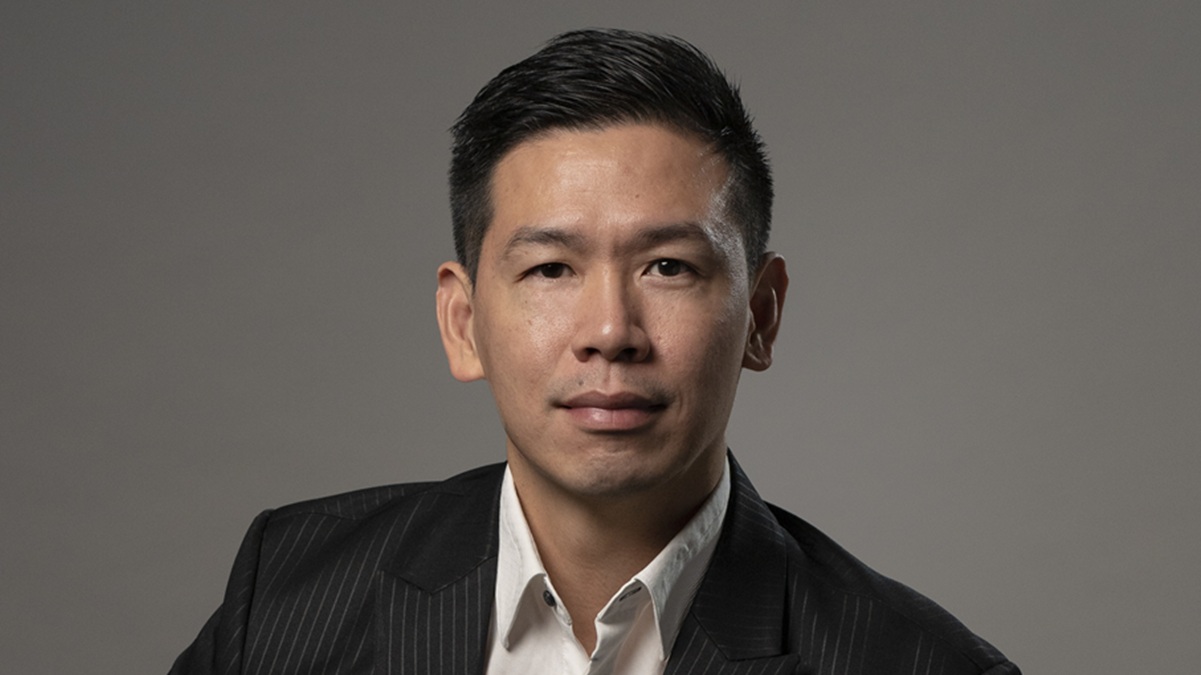
Synology brings the conversation back to data governance. Senior Manager Mike Chen explains that AI agents require access to sensitive data to deliver meaningful value, raising concerns about privacy, compliance, and unauthorised actions. Organisations are also worried about the “black box” nature of AI systems. Synology ensures AI operates within existing permission frameworks and can be deployed in private environments to reduce exposure.
Chen advises organisations to strengthen data governance, enforce least-privilege access, and maintain visibility into AI activity. Robust backup and cyber resilience strategies are essential as AI becomes deeply integrated into operations.

Westcon-Comstor highlights the human element. VP Tidiane Lo explains that organisations are struggling with speed, governance, and trust as AI agents gain authority across systems. Risk is shifting toward identity, privilege, and auditability.
Lo notes that many organisations lack guardrails, human oversight, and evidence of agent behaviour when things go wrong. Westcon helps partners implement governance for non-human identities, map agent permissions to tasks, and enforce least privilege. Lo emphasises that every agent must have accountable human ownership and that human approval should remain part of higher-risk workflows as autonomy scales.
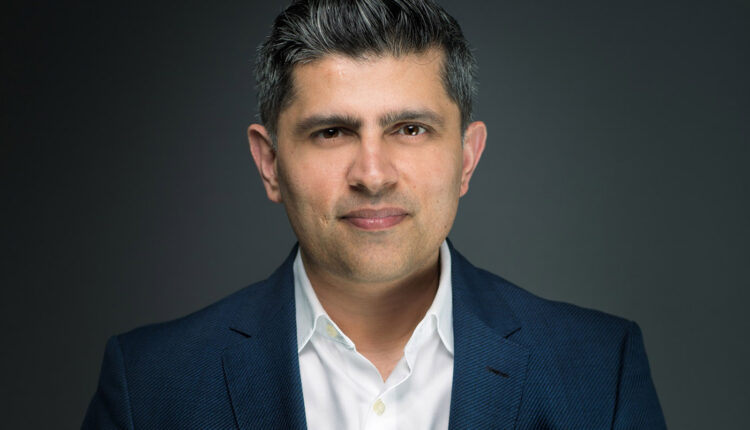
Palo Alto Networks adds a critical dimension to the conversation by focusing on lifecycle risk and runtime behaviour. Haider Pasha explains that autonomous AI agents introduce new risks of unauthorised actions, data exposure, and unchecked costs. When organisations deploy agents across multiple environments without centralised visibility, a trust gap emerges. Pasha identifies two core challenges: agent monitoring and lifecycle risk. Agents often operate with over-permissive identities and unpredictable runtime behaviours that traditional security tools cannot contain.
Palo Alto Networks addresses these challenges through Prisma AIRS, which secures agents across their lifecycle—from configuration to runtime—while providing centralised visibility, policy enforcement, and defences against AI-specific threats such as prompt injection and data leakage. Following the acquisition of Portkey, Palo Alto added a control plane to orchestrate and govern autonomous agents at scale. Pasha advises organisations to deploy integrated platforms that inspect AI traffic at runtime, authenticate every agentic interaction, and provide deep telemetry to ensure reliability at production scale.

WSO2 expands the discussion by addressing the architectural and operational challenges of scaling AI agents responsibly. Dr. Rania Khalaf, the Chief AI Officer explains that organisations struggle to move from experimentation to trusted, enterprise-scale deployment because AI agents combine probabilistic decision-making with the ability to take actions through tools and APIs. This creates new requirements around governance, security, and integration into the digital enterprise fabric. Khalaf notes that organisations worry about agents going rogue, overspending, or deleting critical data—even when instructed not to. WSO2 addresses these challenges through its Agentic Enterprise Fabric, which provides foundational technology for agent identity, access management, integration, and observability. The recently launched
WSO2 Agent Manager offers consistent governance across environments, frameworks, and models, enabling organisations to focus on agents rather than infrastructure. Khalaf emphasises that AI agents must be treated as privileged digital identities with clearly defined permissions, strong authentication, and continuous monitoring. She stresses the importance of zero-trust principles, centralised governance, and integrated security frameworks to ensure safe scaling of autonomous AI systems.

Extreme Networks highlights the evolving security requirements as AI agents become more autonomous and deeply embedded in enterprise operations. The Regional Director – META, Maan Al Shakarchi notes that customers face a fundamental trust challenge as AI shifts from systems that inform to systems that act, requiring confidence in how agents make decisions, operate within context, and adhere to governance frameworks. He explains that while AI value is already proven, organizations must adopt a gradual approach, starting with low-risk use cases and keeping humans in the loop as they scale automation.
Maan emphasizes that enterprises need granular control over AI agent actions, supported by strong role-based access, network segmentation, and robust observability to ensure transparency, accountability, and secure, responsible decision-making.
Together, these perspectives reveal a clear truth: securing autonomous AI is not a single challenge but an ecosystem challenge spanning identity, privilege, data, architecture, governance, and human oversight. As the UAE accelerates toward an AI-powered future, the organisations that succeed will be those that build security into the foundation, not as an afterthought. The UAE has set the direction. Now the region must follow—with ambition, discipline, and a commitment to securing the autonomous future.