










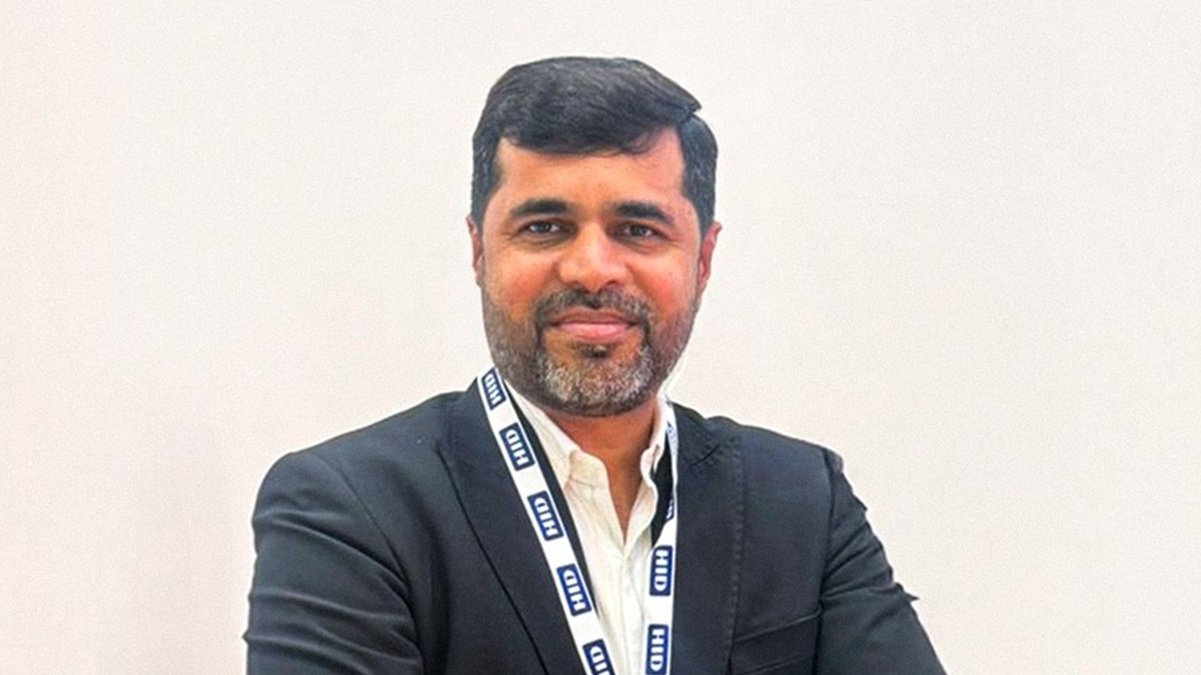
Huzaifa Bismillah, Director, End User Business, MEA, HID, outlines its evolving approach to identity security, emphasizing cyber‑hardened hardware, continuous updates, cloud‑level protection, partner education, and a new all‑in‑one facial recognition device designed for flexible, compliant, and future‑ready access control.
To begin with, could you tell us about your role and the work your team does?
I lead the End User Business Development team for HID across the Middle East. We act as trusted advisors, meeting end customers and consultants to showcase our technologies — from security layers to product features. Our goal is to build demand, guide consultants in specifying the right solutions, and ensure these requirements eventually translate into tenders. My team drives this activity across the region.
Security has become central to every technology conversation today. How does HID approach cybersecurity, especially with AI entering the picture?
Security is absolutely core to our identity management portfolio. Identity starts at the door — what you carry, how you authenticate, and how you move through a facility. Whether it’s our Signo readers, our new facial recognition devices, backend controllers, or HID Origo, every product is designed to be cyber‑secure and hardened. We continuously reinvent and update our hardware to ensure it meets evolving security standards.
How do you cybersecure your products?
Our products are hardened at the base and don’t communicate with external LAN devices, which reduces exposure. Beyond that, we follow global cybersecurity standards, add multiple layers of encryption, and even have an internal White Hat team that actively tries to break our systems. This triple‑layer approach ensures robust protection.
With cloning and data theft becoming easier, how do you prevent such vulnerabilities?
Security threats evolve, and so do our products. We constantly upgrade firmware, enhance standards, and deploy patches that harden security at the door. These updates are easy to deploy across our installed base.
Are these updates automatic? How are they delivered?
Updates can be deployed over the air or physically, depending on the system. HID provides online and offline tools that allow integrators to push patches directly to readers or controllers.
What role do system integrators play in maintaining security?
A critical one. They install, maintain, and upgrade the systems. It’s essential they choose the right cyber‑secure hardware and work with manufacturers who consistently deliver updates. When a reader requires an upgrade, it’s the integrator who deploys the patch at the customer site.
Cloud adoption is rising, but so are concerns about cloud security. How do you address this?
HID’s mobile access solution is cloud‑based, and cloud security is taken very seriously. We conduct regular internal and external testing, maintain certifications such as SOC 2 Type 2 and ISO standards, and continuously scan for vulnerabilities. When we find one, we fix it, deploy the solution, and repeat the cycle. Cloud security is ongoing — not a one‑time exercise.
How do you ensure partners and customers stay up to date on new security developments?
Education and communication are key. We train partners through our technical resources and stay closely connected with end customers. Whenever improvements or updates are released, we proactively inform them so they can enhance their security posture.
Whose responsibility is it to keep customers informed — HID or the partners?
It’s a shared responsibility. Partners maintain the systems, but as a responsible manufacturer, we ensure customers are aware of new security features or updates. It’s a relationship‑driven approach.
How has the market responded to your newly launched facial recognition device?
Exceptionally well. The product has been in the market for about six months and is already gaining strong traction. It’s an all‑in‑one edge device supporting facial recognition, visitor management, keypad authentication, physical cards, BLE, and NFC mobile access. It uses a NIST‑certified algorithm and offers API‑based integration with access control, visitor management, time‑and‑attendance, and even SIP intercom systems. Its flexibility is a major differentiator.
Regulations and compliance vary across countries. How do you manage this complexity?
Compliance is non‑negotiable. Before selling in any country, we ensure all required certifications and regulatory approvals are in place. Our compliance team tracks updates, revalidates certifications before expiry, and ensures every product meets local standards. It’s an ongoing process.
How do you ensure customers are aware of compliance changes, especially since non‑compliance can lead to penalties?
Our compliance team monitors regulatory changes and ensures products remain aligned. Just like product certifications, compliance must be renewed regularly. We keep partners and customers informed so they can take necessary steps on time.