










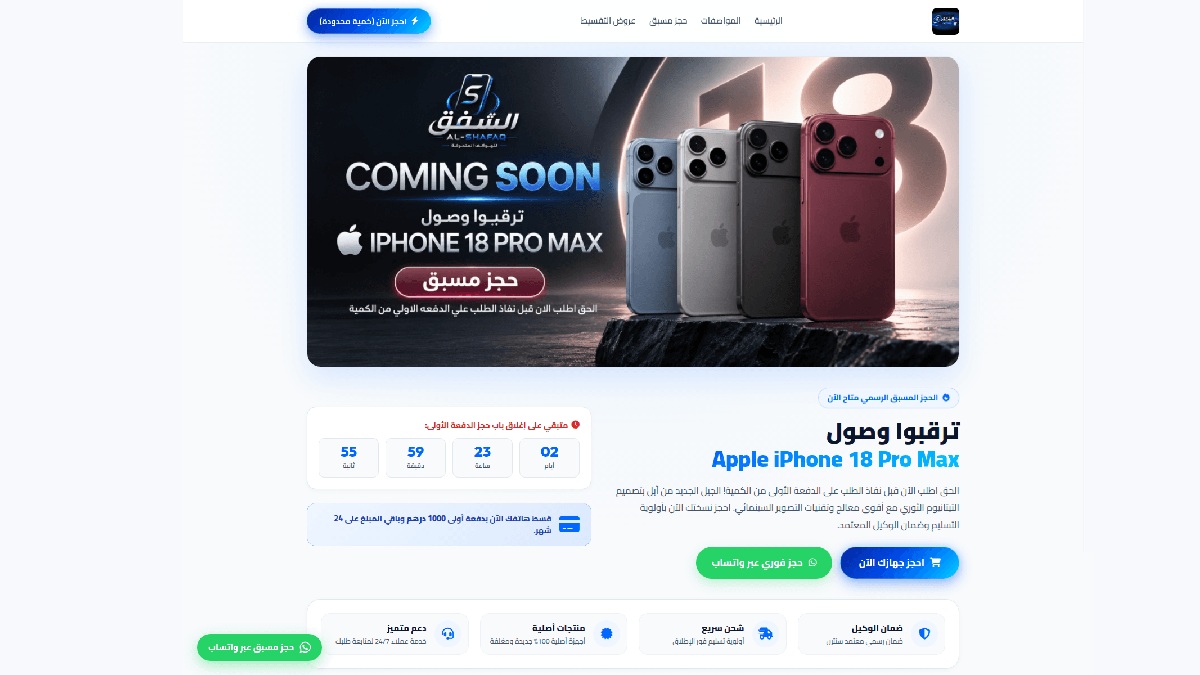
Kaspersky experts have identified fake websites promoting non-existent offers designed to deceive users about the new iPhone 18 models. These scam sites have been discovered in multiple languages, including English, Arabic, Portuguese and others.
One of the identified websites lets users “purchase” new devices, complete with technical specifications and a 25% discount. Among the available payment methods, customers are also encouraged to pay in Bitcoin. Its deceptively credible interface is designed to lower the guard of users, prompt them to enter personal information and transfer funds – but in reality, the only thing buyers might receive is financial loss.
Another fake website invites users to pre-order iPhone 18 Pro devices in a variety of colors, including some that differ from those officially announced by the company at launch, and to select their preferred storage capacity. To make the offer even more enticing, the site claims customers do not need to pay the full amount upfront and can supposedly settle the remaining balance later. In addition, the “seller” promises a full refund if the purchase is canceled – a claim that should not be trusted.
Next, the fake website requests users’ personal information, including their full name, phone number, email address, city of residence, and even their WhatsApp contact details, which cybercriminals may later use in social engineering schemes. Scammers then ask buyers to provide their bank card details. Ultimately, every step of the process is designed to extract as much information as possible, which may later be stolen, while victims’ bank accounts may be drained of funds.
“We have seen scam offers emerge around high-profile device launches for years. Consumer excitement can give cybercriminals an additional advantage and improve their chances of profiting. We strongly advise users to be extremely cautious when choosing where to shop and to make purchases only through official and trusted retailers. Offers that seem too good to be true, as well as product selections that are broader than or differ from those officially announced by the company, should be treated as clear warning signs,” says Olga Altukhova, Senior Web Content Analyst at Kaspersky.
To enjoy new devices without worrying about cyberthreats, Kaspersky advises users to:
- Always purchase new products through official and reputable stores to avoid falling victim to fraudulent offers.
- Check the authenticity of websites before entering personal data. Double-check URL formats and organizations name spellings.
- Secure your payment information. Use dedicated virtual cards or a dedicated payment service for online purchases to avoid exposing your credit card or bank account information.
- Use a reliable security solution such as Kaspersky Premium that blocks phishing links. To ensure advanced protection against increasingly complex cyber threats, Kaspersky actively amplifies its consumer solutions with AI-powered scam protection – a unified suite of technologies that combines machine learning-basedanti-phishing algorithms, real-time behavior monitoring, accompanied by Data Leak and Identity Theft checkers.
- Enable multi-factor authentication and monitor accounts: activate 2FA on IDs and financial apps and regularly review statements for unauthorized activity.