










As regional tensions influence travel patterns, many residents in Saudi Arabia are planning local staycations during the upcoming Eid al-Fitr holiday. Hotels in Riyadh, Jeddah and the Red Sea region are preparing for higher domestic demand, and recent school break trends suggest what may lie ahead. During that period, five-star hotels in Riyadh reached occupancy levels of up to 97 percent, pointing to a similar pattern for Eid.
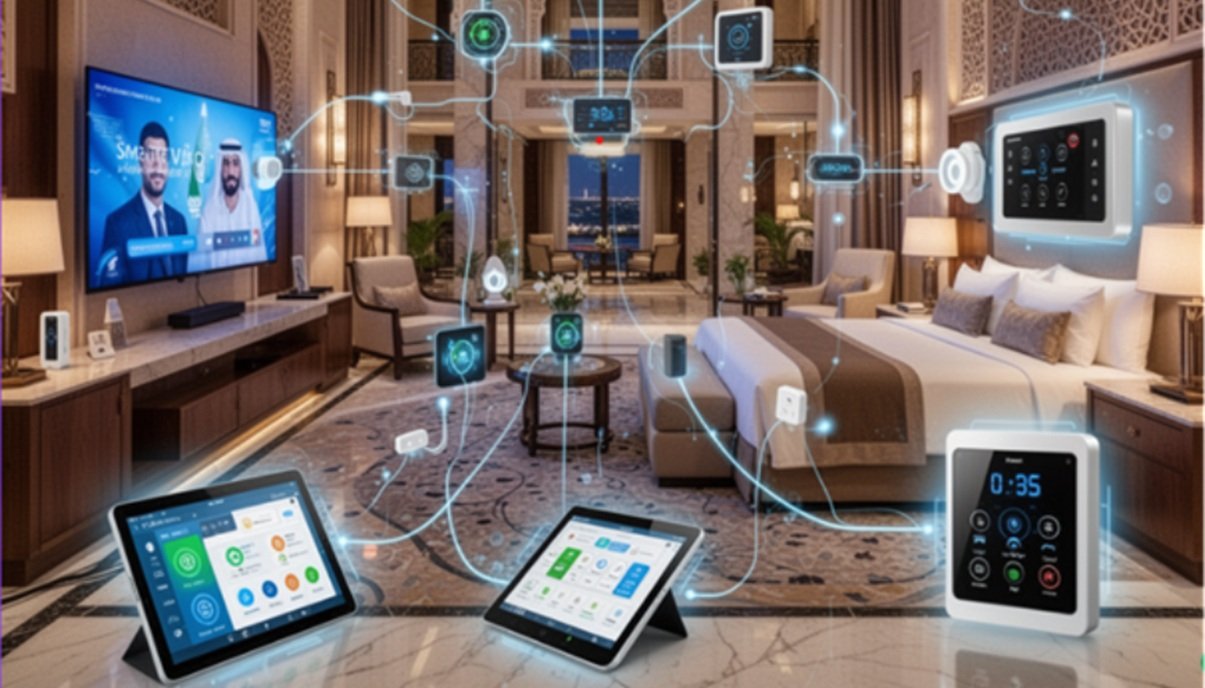
This shift in travel behaviour is unfolding at the same time that Saudi Arabia’s hospitality sector is undergoing rapid technological transformation. Vision 2030 continues to drive the adoption of digital platforms and smart infrastructure throughout the industry. Hotels across the Kingdom are expanding their use of mobile check-in tools, automated room controls and intelligent building management systems designed to improve efficiency and create smoother guest experiences. Flagship developments like the Red Sea destination illustrate how deeply technology is now integrated into the guest journey, with more than 315,000 new hotel rooms planned across the Kingdom by 2030.
While these connected systems enhance the guest experience, they also create new cybersecurity considerations during periods of high occupancy. Smart hotel environments often contain thousands of connected devices operating quietly in the background, and many still run with default passwords, outdated software or unmanaged configurations. As hotels rely more heavily on digital services during peak periods, these weaknesses may increase the risk of service disruption, unauthorised access or exposure of operational data. These concerns align with broader expectations set by the National Cybersecurity Authority, which encourages organisations to strengthen security across operational and connected systems.
According to Osama AlZoubi, Regional Vice President for Saudi Arabia and the Middle East at Phosphorus Cybersecurity: “One of the biggest challenges we see these days is the belief that traditional IT security tools can protect IoT devices. IT systems have powerful processors and full operating systems, but most IoT devices do not, and that means you cannot install the same security agents or EDR tools on them. This creates a gap that has to be handled differently. For every laptop or server, there are often several times more IoT devices, whether they are smart locks, sensors, cameras or room control technologies. These devices are essential for daily operations, but they are much harder to manage at scale. As demand rises during peak periods like Eid, having clear visibility into these devices and ensuring they are correctly configured becomes critical to avoiding disruption.”
The National Cybersecurity Authority has already called on organisations to strengthen protections around operational and connected systems, and hotel environments are increasingly part of that discussion. For Saudi operators, the challenge is not simply adding more security controls, but gaining basic real-time visibility into the thousands of devices now embedded in every property, understanding which ones are most exposed and ensuring that critical systems are not left running with factory settings during the busiest periods of the year.
As domestic tourism continues to grow and the first generation of hyper-connected resorts open their doors, the question for Saudi hospitality is no longer whether connected devices create risk, but how quickly that risk can be measured and reduced before it impacts guests.
With Eid demand approaching, hotel operators across the Kingdom should take this opportunity to audit connected device configurations, close known gaps and ensure their IoT environments are ready for peak occupancy