









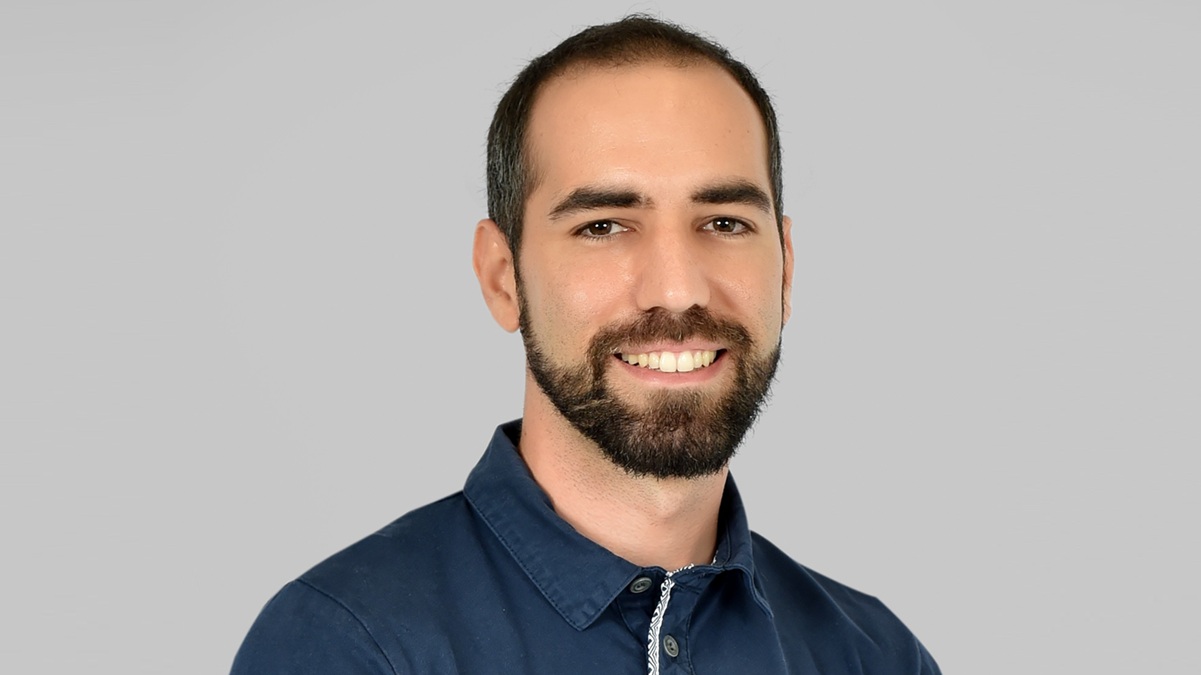
Dr. Victor Mateu, Chief Researcher at the Cryptography Research Center, TII underscores how the institute’s work positions the UAE at the forefront of quantum‑safe security, advancing cryptography, digital signatures, and global standards to ensure resilience against Q‑day.
How do you assess the current global race toward quantum-safe security, and where does the UAE—particularly TII—position itself within this landscape?
In the last 12 months, I believe we have seen a significant acceleration towards migration to quantum-safe cryptographic solutions. Awareness is no longer limited to experts – organizations that manage critical digital infrastructure are now directly engaging in the conversation.
While people often refer to this as a “global race”, I see it differently. It is not a race between countries – it’s a race against time. The moment when quantum computers can break today’s encryption, often called Q-day, is the real competitor. Because of that, the global effort is actually very collaborative. Researchers, standards bodies, and industry partners are working together to secure digital systems before that disruption arrives.
The UAE recognized early that a coordinated transition to quantum-safe security is essential. From my perspective, this foresight allowed organizations here to begin assessing risks and preparing for migration sooner than many others. At TII, I believe we play an important role by conducting advanced research, contributing technical insights, and developing home-grown solutions that strengthen the UAE’s technological resilience.
What are the most significant breakthroughs your team at the Cryptography Research Center has achieved in developing quantum-resistant algorithms and protocols?
One of our major achievements is co-developing HQC, which has been selected as a NIST standard for securely establishing cryptographic keys. Key establishment is the process that allows two parties, for example, your browser and a website, to agree securely on a shared secret used to protect your communication. HQC ensures this process remains secure even against quantum computers, which is why its selection as a standard is so important.
Another breakthrough I’m proud of is our contribution to quantum-safe digital signature algorithms. Digital signatures are essential for verifying identities and ensuring the integrity of software, documents, and online transactions. Currently 6 out of 14 candidates in round 2 of NIST standardization process for additional signatures, are co-invented by TII researchers. This shows the global impact of our work and the strength of our scientific team.
Many organisations still underestimate the urgency of quantum-safe migration. What risks do you see for those delaying adoption, especially in critical sectors like finance, defence, and national infrastructure?
I believe the risks of delaying migration are significant. The most immediate threat is what we call harvest-now-decrypt-later attacks. This means an attacker can store encrypted data today and simply wait for quantum computers to become powerful enough to break it. Any information with long-term value, for example financial records, personal data, strategic communications, becomes vulnerable.
There is also the operational risk. Cryptographic migration is complex because encryption is embedded deep within digital infrastructure, often in ways organizations are not fully aware of. If companies wait too long, they may be forced into rushed migrations, increasing the chance of errors, security gaps, or incomplete transitions.
That’s why I believe the first step, discovering where and how cryptography is used across an organization, is crucial. Only then can institutions plan a smooth, secure, and well-tested migration to quantum-safe systems.
How is TII collaborating with international standards bodies, academia, and industry to accelerate the development and deployment of quantum-secure cryptography?
At TII, we work closely with NIST in drafting standards such as HQC-KEM, which will protect encrypted communications on the internet and other digital channels. Being directly involved in shaping these standards ensures our research contributes to global security, not just local needs.
On digital signature algorithms, six candidates still under consideration in NIST’s current round were co-invented by our researchers – a strong indicator of our global footprint.
We also continually develop new algorithmic improvements, analyse the security of candidate schemes, and publish our findings in top-tier cryptography conferences and journals. This combination of innovation, evaluation, and international collaboration ensures that quantum-safe solutions are both secure and practical for real-world adoption.
What role do you see the UAE playing in shaping global cryptographic standards and contributing to the evolution of post-quantum security technologies?
I genuinely believe the UAE is already contributing meaningfully to global cryptographic standards. Our involvement in HQC-KEM and digital signature standardisation efforts demonstrates that the country, through TII, is part of the international community defining the next generation of digital security.
At TII, we also build tools like PQ-SORT, which helps organisations compare different quantum-safe algorithms and understand performance, size, and security trade-offs. This is important because selecting the right algorithm depends heavily on the use case.
Similarly, our Cryptographic Estimators tool helps choose safe parameters for quantum-secure algorithms, ensuring an appropriate balance between performance and protection.
These contributions help the global community move faster and make informed decisions, and I see the UAE playing a sustained leadership role as these technologies mature.
With the UAE investing heavily in advanced research—AI, quantum, and cybersecurity—how do these national priorities influence your centre’s research direction and long-term innovation goals?
These national priorities align very naturally with our mission at TII. Our long-term goal is to develop technological IP that can be commercialized globally and can contribute to secure digital transformation everywhere.
To achieve this, I believe we must push scientific boundaries and deliver innovations that create real-world impact. For example, we’re building quantum-safe cryptography that can be embedded directly into AI systems and cybersecurity products – ensuring these technologies remain secure well into the future. This is also why we develop complementary solutions such as VEIL and PetalGuard.
A strategic priority for us is ensuring these advanced technologies are developed and validated in the UAE. This supports local stakeholders while contributing valuable innovations to the global community.
One recent example is our work on privacy-preserving AI systems, which help organizations benefit from AI without compromising sensitive data. This is exactly the kind of integrated, forward-looking research that aligns with the UAE’s ambitions and our own scientific vision.
What upcoming innovations or research milestones in quantum-safe cryptography can we expect from TII, and how will they support the UAE’s ambition to be a global leader in secure digital transformation?
I expect TII to remain deeply involved in future NIST standardization efforts for post-quantum cryptography. Standardization is critical because it ensures global interoperability and widespread adoption.
Beyond that, we are focused on improving the usability and performance of quantum-safe solutions when deployed at scale, for example, ensuring they integrate effectively with existing protocols and infrastructure.
By advancing both the science and the practical deployment of these technologies, we help protect digital infrastructure and strengthen trust in emerging technologies. I believe these innovations will not only support the UAE’s ambitions but also contribute to global progress in secure digital transformation.