










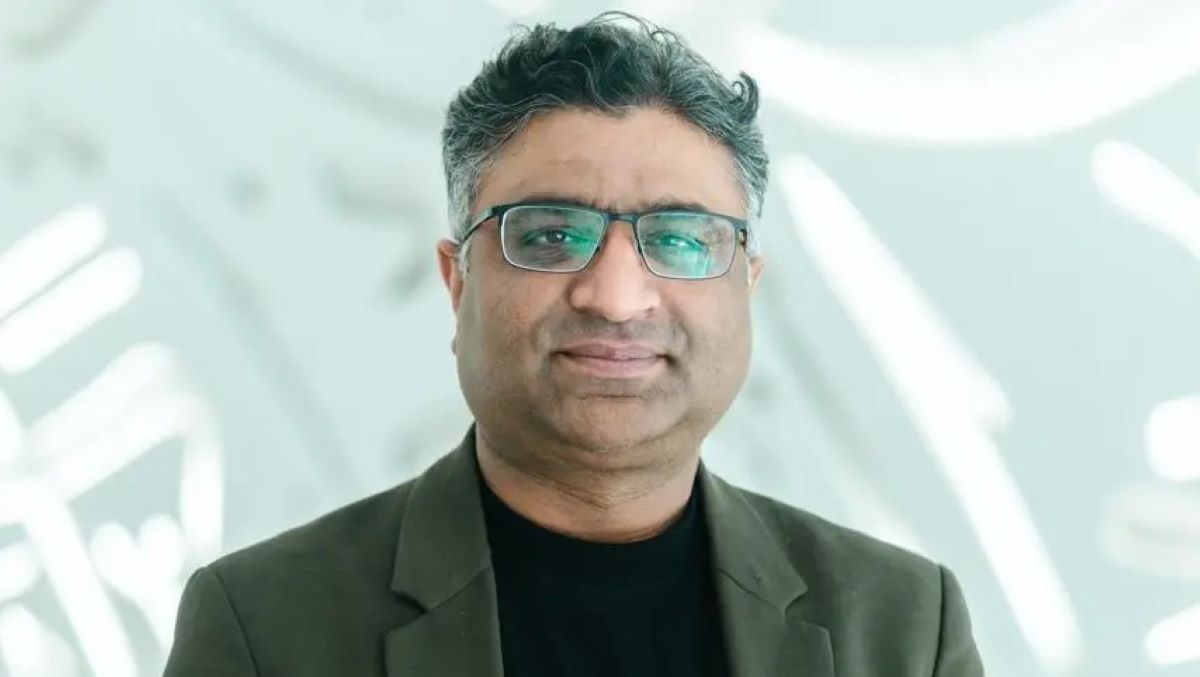
Bilal Baig, Regional Technical Director, AMEA at Trend Micro, underscores the company’s Black Hat MEA participation, showcasing AI-driven innovations, cloud security, and talent development to boost Middle East cyber resilience.
What motivated Trend Micro to participate in Black Hat MEA, and how does this align with your regional cybersecurity strategy?
At Trend Micro, Black Hat MEA has become a flagship moment in our year. We’ve been part of this event for several years now, and it has evolved into a meaningful platform where we engage deeply with customers, partners, and the wider cybersecurity community.
Our participation is driven by a clear purpose showcasing our latest innovations, educating the market, and raising awareness about the threats shaping today’s digital landscape. It also gives us the opportunity to connect with industry leaders, policymakers, and organizations who share our commitment to strengthening the region’s digital resilience.
This aligns seamlessly with our regional strategy, which focuses on empowering organizations with the capabilities, intelligence, and partnerships they need to stay secure. Black Hat MEA allows us to demonstrate how Trend Micro supports this mission across cloud security, threat intelligence, AI-driven cyber defense, and sovereign cybersecurity initiatives. And as always, we are proud to be here alongside our partners because cybersecurity is a shared responsibility.
From your perspective, what are the most pressing cybersecurity challenges facing organizations in the Middle East today?
One of the most pressing challenges facing organizations in the Middle East today is the rapid rise of AI-driven cyberthreats. While AI is transforming how businesses operate improving efficiency, enhancing decision-making, and accelerating innovation attackers are adopting the same tools to increase the speed, scale, and sophistication of their campaigns. This creates a threat landscape that is more automated, more unpredictable, and far harder to defend against.
We highlight this extensively in our newly released Security Predictions Report for 2026. The region is operating in a hyper-connected environment where cloud platforms, third-party suppliers, and distributed infrastructures are all tightly linked. In such ecosystems, a single misconfigured setting, an exposed credential, or a compromised vendor can trigger a ripple effect across the entire organization.
Another key challenge is the expanding attack surface created as organizations weave AI and automation into their daily workflows. With systems becoming more interconnected, striking the right balance between rapid innovation and robust security is becoming increasingly complex.
Our report identifies six major threat areas that will shape 2026. AI threats, advanced persistent threats, enterprise threats, cloud risks, ransomware, and vulnerabilities. Across all of them, the message is consistent: cyberthreats are becoming faster, more automated, and more coordinated. This means organizations must strengthen visibility, resilience, and proactive defense if they want to stay ahead
How is Trend Micro leveraging AI and machine learning to strengthen defenses against evolving threats?
AI has been at the core of Trend Micro’s technology for more than a decade, but today we’re applying it in more advanced and strategic ways to stay ahead of fast-moving threats.
Building on the insights from our security predictions report, we’re focused on using AI to detect, analyze, and respond to threats at machine speed. This includes leveraging machine learning for behavioral analysis, anomaly detection, and identifying subtle patterns that traditional tools would miss. AI allows us to process massive volumes of data across email, endpoints, identity systems, cloud workloads, and networks giving organizations unified visibility and faster detection.
We also use AI to automate incident response, correlate signals across environments, and block attacks before they can cause disruption. With the rise of AI-driven cyberthreats, defenses must move just as quickly. Our platform, Trend Vision One, uses advanced analytics and AI-assisted investigation to reduce alert fatigue, accelerate root-cause analysis, and help security teams respond with greater accuracy.
Ultimately, our goal is to ensure that AI becomes a force multiplier for defenders not attackers by giving organizations the intelligence, automation, and agility needed to stay resilient in the face of increasingly sophisticated threats.
What experiences and insights can visitors look forward to from Trend Micro at the show?
We will be showcasing the full capabilities of Trend Vision One, including our Digital Twin technology, Cyber Risk Exposure Management, Agentic SIEM, and our latest advancements in extended detection and response. Our Digital Twin technology creates a real-time virtual replica of an organization’s environment, helping security teams visualize assets, map attack paths, and anticipate vulnerabilities before they are exploited. With Cyber Risk Exposure Management, organizations gain a unified, continuously updated view of their most critical risks, supported by clear, prioritized actions to reduce exposure proactively.
Our Agentic SIEM goes a step further by using AI-driven reasoning to automate correlation and investigation, independently gathering context and accelerating responses that would otherwise take hours. Meanwhile, our latest XDR enhancements unify data across endpoints, email, cloud, and network layers delivering deeper visibility, earlier detection of sophisticated attacks, and faster, more accurate response.
These solutions are designed to give organizations deeper visibility, stronger protection, and faster response times across their entire digital environment. At Black Hat MEA, our experts will demonstrate how these capabilities work in real-world scenarios, how AI is enhancing threat detection and automation, and how organizations can build proactive defense strategies rather than reacting after an incident occurs.
With the rapid adoption of cloud and digital services in the Middle East, how is Trend Micro helping organizations secure this transformation?
As cloud adoption accelerates across the Middle East, organizations need security that can keep pace with the speed and complexity of modern architectures. At Trend Micro, we support this transformation through our unified Cloud Native Application Protection Platform (CNAPP), which provides end-to-end protection across the entire cloud lifecycle.
Our CNAPP approach brings together workload security, cloud security posture management, container protection, identity security, and runtime threat detection all within a single, integrated platform. This allows customers to gain complete visibility across their multi-cloud environments, automatically detect misconfigurations, and continuously secure applications from development to production.
With Trend Vision One for Cloud, organizations can seamlessly manage risks, enforce compliance, and respond to threats faster through AI-powered analytics and automation.
Cybersecurity talent is a global challenge. How is Trend Micro contributing to building local expertise and skills in the region?
Strengthening cybersecurity talent is a global priority, and it’s equally important for the Middle East as the region accelerates its digital ambitions. At Trend Micro, we are committed to helping develop local expertise and empowering the next generation of cyber professionals.
We run continuous internship programs that give young talent real, hands-on experience with cybersecurity tools, investigations, and real-world projects. We also provide training workshops, certification programs, and knowledge-sharing sessions designed to upskill professionals at different stages of their careers.
Our participation in major regional events including Black Hat MEA and competitions like Cyber Defense Challenge further creates opportunities for learning, experimentation, and exposure to advanced threat scenarios. These initiatives reflect our long-term commitment to building a strong, capable cybersecurity workforce that can support the region’s digital future
What outcomes or opportunities do you expect from Black Hat MEA in terms of customer engagement, technology adoption, and expanding Trend Micro’s footprint in the Saudi market?
Black Hat MEA is one of the most strategic touchpoints for us in the region, and we see it as a catalyst for deepening customer relationships and accelerating technology adoption in Saudi Arabia. The event allows us to engage directly with organizations across key sectors including government, finance, energy, telecom, and critical infrastructure and understand their evolving priorities around cloud, AI, and digital transformation.
We expect this year’s participation to open new opportunities for customers to experience our latest technologies firsthand, especially Trend Vision One, our CNAPP capabilities, Digital Twin technology, and our AI-driven security solutions. These conversations often translate into long-term collaboration, where we work closely with organizations to modernize their defenses and align security with their growth agenda.
Looking ahead, what role do you see Trend Micro playing in shaping the cybersecurity landscape of Saudi Arabia and the wider Middle East?
Saudi Arabia and the wider Middle East are entering a pivotal stage of digital transformation, and cybersecurity will be essential to enabling that momentum. Trend Micro’s role is to serve as a trusted partner that brings global intelligence, regional expertise, and long-term commitment to strengthening cyber resilience.
We will continue supporting organizations as they adopt AI and emerging technologies, ensuring they can innovate securely and confidently. Our focus remains on enhancing visibility, improving readiness, and helping customers stay ahead of fast-evolving threats.
Beyond technology, we are committed to developing local talent, sharing best practices, and working closely with public and private sector stakeholders.