











As the gleaming towers of the Dubai World Trade Centre reflect morning sun, the pulse of innovation hums anew, and preparations for GITEX 2025 are in full swing. For years, GITEX has been a crossroads for technology visionaries, government leaders, startups, and industry giants. But this year, perhaps more than ever before, the spotlight is fixed unwaveringly on cybersecurity.
The forces driving this heightened urgency are unmistakable. The Middle East Cybersecurity Market, according to a new report by MarketsandMarkets, is projected to expand from USD 16.75 billion in 2025 to USD 26.04 billion by 2030 — a forecast reflecting not only rising demand, but a rapidly intensifying threat environment. As AI, automation, edge computing, and Internet of Things infrastructures deepen their hold, adversaries are evolving in lockstep — using generative models, deepfakes, polymorphic malware, and AI‑augmented reconnaissance to breach once-impenetrable defenses.
Amid this high-stakes environment, GITEX has transformed into more than a trade fair; it is a strategic theater where the region’s cybersecurity roadmap is actively shaped. Executives and engineers, ministers and solution architects convene to question assumptions, expose vulnerabilities, and forge partnerships to outpace adversaries. That sense of purpose — the tangible urgency of “what’s next?” — gives the show floor an electricity all its own.
The New Threat Landscape: AI, Deepfakes, Identity, Infrastructure
One of the most recurring themes at GITEX is the accelerating shift in the attacker’s playbook. As adversaries lean into AI-driven social engineering, the boundaries between real and fabricated are blurring. For companies across the region, 2025 is already proving to be a watershed year.

Ilia Dafchev, Senior Security Researcher at Acronis TRU, describes the transition in chilling detail: “Phishing already accounts for 25 % of all attacks in the first half of 2025, and more than half of those target MSPs. What we’re seeing now is phishing weaponized by AI — deepfake videos, voice phishing, impersonations in collaboration tools. The credibility of these attacks is going up dramatically.” To counter this, Acronis is doubling down regionally, opening a Cyber Cloud Data Center in Abu Dhabi and equipping partners with integrated platforms that combine endpoint detection, backup, disaster recovery, and threat intelligence.

Yet for many organizations, the rising sophistication of attackers is matched only by the widening attack surface. Fady Younes, Managing Director for Cybersecurity at Cisco Middle East, Africa, Türkiye, Romania and CIS, points out, “Organizations face growing risks from AI-powered phishing, deepfake-based social engineering, supply chain attacks, and increasingly sophisticated ransomware. Cisco is addressing these issues with advanced AI-driven security solutions like AI Defense, Hybrid Mesh Firewall, and Universal Zero Trust Network Access (ZTNA), which simplify security management and enhance visibility.”

Check Point’s regional leadership underscores the scale of the challenge. Ram Narayanan, Country Manager at Check Point Software Technologies, Middle East, notes that over the last six months, organizations in the Middle East have faced an average of 2,200 attacks per week — in sectors like healthcare, telecom, and government, which contend with intense scrutiny and high stakes. “Information disclosure vulnerabilities affect 71 % of organizations,” he says. Check Point’s response is prevention‑first: the Infinity architecture, rooted in ThreatCloud AI, unifies protections for networks, endpoints, cloud, and email. Their Harmony Email & Collaboration suite is being placed front-and-center at GITEX as a bulwark against rising email-based breaches — a classic vector that remains stubbornly effective.

Amid these transformations, identity itself is emerging as the most critical battleground. At CrowdStrike’s exhibit, Roland Daccache, Sr. Manager, Sales Engineering, Middle East & Africa, paints a stark picture: “We’ve seen AI increasingly used to bypass MFA and compromise machine identities. Identity is now a prime attack surface.” His answer? CrowdStrike’s AI Detection and Response (AIDR), which spans data, models, infrastructure, agents, and requests across the AI pipeline. In Dubai, they are showcasing how this tool can help organizations harden their posture holistically — from identity to data to operations.

Compounding the threat is the proliferation of interconnected infrastructure: smart cities, 5G nodes, edge devices, IoT sensors. Extreme Networks’ Principal Systems Engineer, Matthew Palmer, argues that in this environment, the network must evolve into a first line of defense. “We’re embedding security into the fabric of connectivity — applying AI-powered networking, zero-trust, microsegmentation, and real-time analytics. As Gulf governments roll out national digital ambitions, their networks must do more than connect — they must protect, predict, and adapt.”

“Organizations across the region are now facing a perfect storm: multi-vector DDoS attacks at service-provider scale and increasingly stealthy ‘low-and-slow’ application-layer threats. These attacks are designed to bypass traditional detection systems by mimicking legitimate traffic patterns using automation,” Dr. Emad Fahmy, Director of Systems Engineering, Middle East, NETSCOUT. “The company’s H1 2025 Threat Intelligence Report confirms a sharp rise in such activity. To counter this, we advocate for real-time threat visibility, adaptive mitigation, and a shift toward proactive, not reactive, security models. Our technologies — including Omnis Cyber Intelligence and Adaptive DDoS Protection — are enabling governments and enterprises to defend national networks and essential services more effectively.”

Biju Unni, Vice President, Cloud Box Technologies, stated that “AI is making attacks more autonomous, scalable, and unpredictable. Ransomware variants are now morphing faster than signature-based defenses can respond, while phishing campaigns are increasingly personalized through generative AI. The consequence is not just data loss, but disruption to business operations and reputational damage. To stay ahead, organizations must focus on continuous monitoring, rapid threat detection, and secure network architectures. Our work with public and private sector clients emphasizes Zero Trust, AI-driven security operations centers, and secure cloud access — all designed to support regulatory compliance, digital sovereignty, and operational continuity in the face of emerging threats.”

“Deepfake-enabled phishing, polymorphic malware, and identity-based intrusions are growing in scale and sophistication. These threats are no longer sporadic — they are persistent, automated, and increasingly targeted,” Meriam ElOuazzani, Senior Regional Director, META, SentinelOne. “The challenge lies in speed and accuracy: detecting and neutralizing threats in real time. That’s where AI-native platforms like SentinelOne’s Singularity come in, delivering autonomous response, behavioral analytics, and full-stack visibility. As regional governments and enterprises adopt cloud, IoT, and AI at scale, securing critical infrastructure and identity environments must become central pillars of cybersecurity strategy. Anything less invites disruption.”

Rakesh Parbhoo, EVP, Middle East & Africa, Westcon-Comstor said, “In 2025, we’re seeing not only an increase in volume of attacks, but also their complexity — from quantum decryption risks and AI-powered intrusions to vulnerabilities introduced by misconfigured cloud environments and legacy infrastructure. Traditional perimeter defenses are insufficient. What’s needed is a layered, intelligence-driven approach combining network, endpoint, and identity security. The challenge is especially critical for sectors under geopolitical pressure, where the cyber battlefield is as strategic as any physical one. Building resilience means simulating attacks, validating security outcomes, and prioritizing incident readiness across the organization.”
The Transformation of Channel Partners: From Resellers to Resilience Architects
Another major narrative swirling through GITEX is the metamorphosis of channel partners. In an era where security cannot be bolted on, resellers are being asked to become strategic advisors, integrators, and managed service providers — often overnight.

Ilyas Mohammed, COO at AmiViz, captures the shift with urgency. “Automation and AI have changed the rules of engagement. Partners can no longer simply resell a firewall or antivirus; they must deliver holistic, secure-by-design solutions and guide customers through the entire lifecycle.” His philosophy: partner success lies in being the connective tissue between vendor technology and customer needs, especially in a region where regulatory, cultural, and architectural nuances often dictate what is viable.

This push is supported by vendors investing in partner enablement and immersive experience labs. At the Dubai center, OPSWAT has opened the region’s first Critical Infrastructure Protection Lab, where channel partners step into simulated environments — smart water plants, transit systems, power grids — and experience attacks in real-time. “We don’t just demo tools; we simulate crises,” says Rami Nehme, Regional Sales Director. “This instills operational confidence — partners will know how these systems behave under duress, not just on paper.”
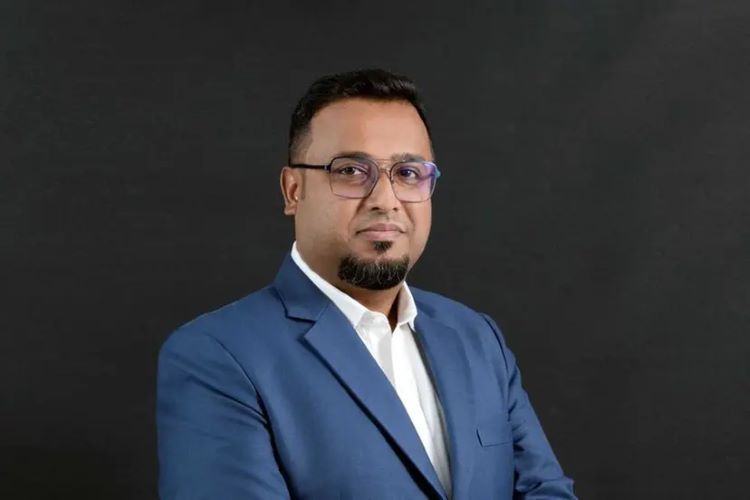
ManageEngine is also leaning hard into partner-centricity. Sujoy Banerjee points to the twin challenges the region faces: a cybersecurity skills gap and rampant adoption of shadow AI (unauthorized AI tools used internally). “Many organizations here don’t have the in-house capacity to manage sophisticated AI threats. Partners can serve as trusted advisors — helping them choose, integrate, and monitor tools across domains like identity, SIEM, EDR, and analytics — not as a one-time deployment but in an ongoing managed service model.”
Other vendors are pursuing similar routes. Cisco, for instance, is rolling out secure-by-design blueprints and immersive training modules to empower partners to lead, not follow. Check Point highlights how partners can embed email, cloud, and network controls — all tightly aligned to specific use cases. Fortinet is reshaping its partner programs so resellers can evolve into MSSPs, offering layered threat intelligence, live monitoring, and detection. In every case, GITEX is the stage where the vendor-partner synergy is made explicit, where the conversation shifts from product stacking to architecture, resilience, and outcome.
Building Resilience: Beyond Prevention to Recovery and Continuity
While so much of the discourse at GITEX centers on prevention and detection, a quieter yet equally urgent narrative is running alongside it: the ability to recover. Because in the age of AI and persistent threats, no defense is unbreachable.

Commvault’s Fady Richmany reframes the challenge bluntly: “Many organizations operate under a false sense of security. Being secure is not the same as being able to recover.” Their GITEX exhibit features Cleanroom Recovery and Cloud Rewind, simulation tools enabling organizations to stress-test their recovery protocols. “We help them benchmark their ‘mean time to clean recovery’ — not just how fast they patch, but how cleanly they restore operations in a contaminated environment.” In Richmany’s view, resilience is the missing link in many cyber strategies.

Fortinet’s narrative aligns with this: “It’s not just the incident that’s dangerous — it’s the campaign,” says Shadi Khuffash, Senior Regional Director, South Middle East. Large-scale intrusions by state actors often remain dormant for months before they trigger. That’s why Fortinet blends real-time prevention via FortiGuard Labs with a tightly coupled approach to incident response and recovery, bolstered by strong regional partner networks.
This dual emphasis — on protection and post-incident recuperation — is increasingly recognized as the hallmark of cybersecurity maturity in the region. It’s no longer enough to simply detect malware or block ransomware; organizations must architect systems that anticipate failure and restore trust under pressure.
Local Context, Sovereign Control, and Regional Nuances
One of the most important subtleties at GITEX is how vendors are tailoring their strategies to the region’s unique geopolitical, regulatory, and infrastructural environment. Cybersecurity is never one-size-fits-all — and in the Middle East, resilience must navigate cultural attitudes, data sovereignty laws, and national security expectations.
Acronis, for example, emphasizes its regional presence via its Abu Dhabi data center, which enables low-latency operations and satisfies stringent compliance demands. They also tailor threat intelligence to local patterns, feeding the TRU team’s insights back into detection engines optimized for threats common in the GCC.

Ilias Tsapsidis, Sales Director for ESET Middle East, Greece, Cyprus & Malta highlights the impact of geopolitical tensions. “Nation-state actors in this region aren’t hypothetical — they are active. We’re seeing growing attempts to compromise energy, finance, and government sectors using hybrid tactics: supply chain, IoT, cloud misconfiguration. At GITEX, we’re engaging directly with governments and critical infrastructure operators to deliver AI-powered monitoring that’s respectful of regional sovereignty.”

Mindware, a regional integrator, positions itself not just as a vendor but as a cybersecurity advisor. “In this environment, tools are necessary but insufficient,” explains Ehab Adel, Director, Cybersecurity at Mindware. “We embed strategy, compliance, architecture, and continuous security into each deployment. With our regional SOCs, sovereign cloud support, and AI-enabled platforms, we tailor solutions to public and private sector needs in the Middle East.”
