









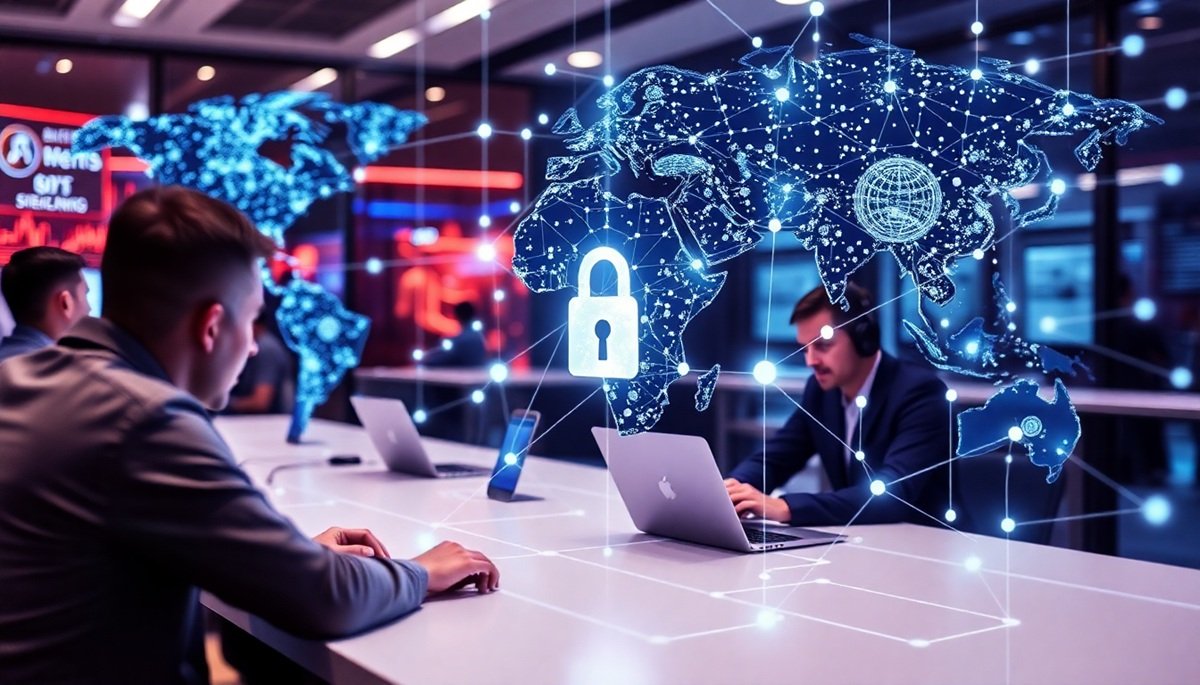
The Middle East’s digital transformation is unfolding at a breathtaking pace. From Riyadh’s futuristic NEOM project to Dubai’s ambition of becoming the world’s smartest city, the region is wiring up oil rigs, ports, financial centers, and entire cityscapes with connected technologies. But as infrastructure becomes more intelligent, it also becomes more vulnerable. Cybercriminals, armed with the same AI that powers innovation, are targeting critical assets with increasingly sophisticated attacks.
Analysts predict that cybersecurity spending in the region will surge at double-digit rates through 2030, driven by government mandates and the growing threat of AI-enhanced breaches. Saudi Arabia and the UAE are leading investments in zero-trust frameworks, secure access service edge (SASE) deployments, and AI-driven threat intelligence. In this environment, the security industry isn’t just supplying tools—it is racing to stay ahead of adversaries that never sleep.

Ram Narayanan, Country Manager at Check Point Software Technologies, emphasises that defending against AI-driven threats requires a prevention-first mindset. “Autonomous malware, deepfakes, and generative AI-enabled attacks are evolving at unprecedented speed,” he says. Check Point’s ThreatCloud AI, powered by over 50 AI engines, analyses billions of indicators daily to stop threats before they reach critical systems. Narayanan explains that their GenAI Security solution protects generative AI use cases, while Check Point Research continuously uncovers emerging attack methods. With hybrid work and edge computing expanding the threat surface, the Infinity Platform ensures unified visibility, control, and prevention across cloud, network, user, and IoT environments. Its modular architecture allows organisations to scale security seamlessly as their networks grow, while integrated AI-driven automation accelerates threat detection and response. Coupled with Harmony SASE, organisations can detect, respond, and proactively hunt threats, maintaining operational resilience regardless of location or device.

Modern enterprises face unprecedented complexity in defending their networks, and Roland Daccache, Senior Manager of Sales Engineering at CrowdStrike MEA, underscores the challenge. “Organisations can no longer protect what they cannot see,” he says, referring to sprawling hybrid environments where endpoints, cloud services, and remote identities create thousands of potential attack vectors. CrowdStrike’s AI-native Falcon platform tackles this by delivering real-time detection and automated response, reinforced by generative AI assistants like Charlotte AI. Daccache explains that these tools not only identify threats instantly but also guide security teams in responding efficiently, bridging gaps caused by distributed workforces and complex infrastructures. By combining speed, clarity, and automation, Falcon allows enterprises to act decisively against sophisticated attacks. For Daccache, success lies in giving organisations the ability to anticipate and neutralise threats, ensuring that cybersecurity becomes an enabler of innovation rather than a reactive burden.

The same challenge of securing sprawling, complex environments is magnified at the network layer. Roy Verboeket, Vice President of Sales Engineering EMEA at Extreme Networks, emphasises that as enterprises expand their digital estates, hidden blind spots become prime targets for attackers. “Extreme Platform ONE provides end-to-end visibility, integrates security with AI, and automates mitigation,” he explains. The platform continuously monitors network traffic, detects anomalies, and applies policies consistently across users and devices. By ensuring that security protocols follow employees wherever they connect—on-site, remotely, or across borders—Extreme addresses one of the most vulnerable points in distributed organisations: inconsistency. For Verboeket, bridging these gaps is critical not only for compliance but also for enabling enterprises to operate confidently in today’s highly interconnected, hybrid environments.
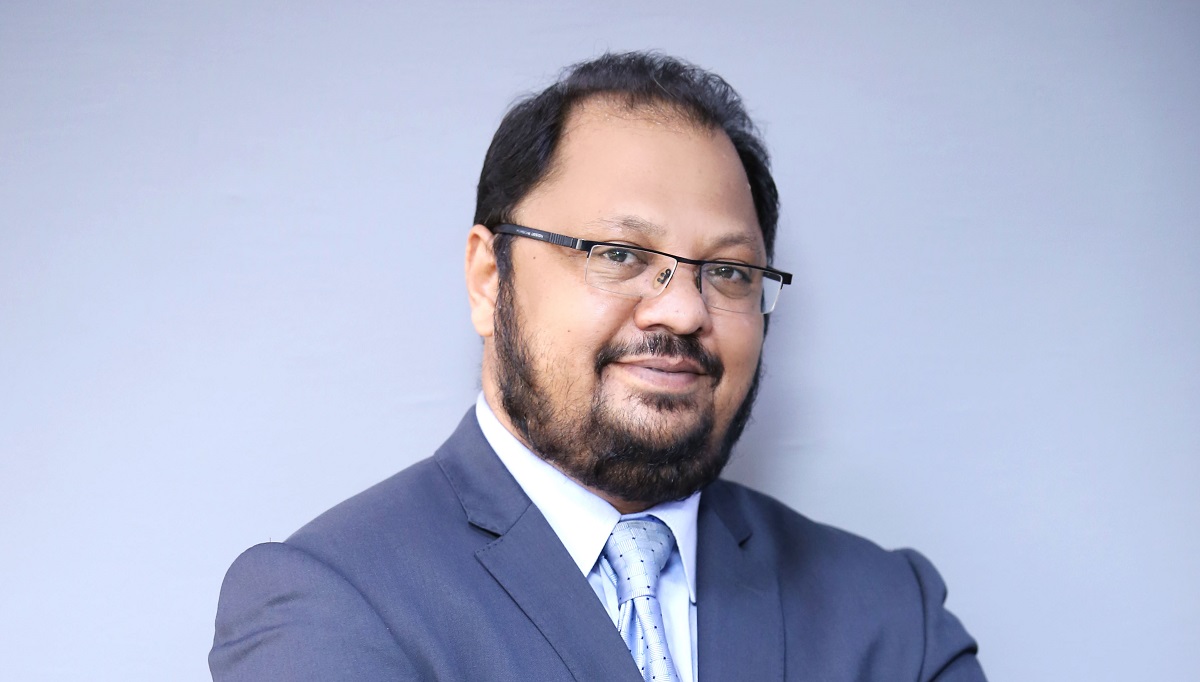
But even the most sophisticated cybersecurity tools are only as effective as the ecosystem that supports them. That’s where integrators and aggregators make the difference. At AmiViz, COO Ilyas Mohammed describes his mission as bridging the gap between advanced technologies and practical enterprise needs. “Our approach ensures organisations not only detect and respond to AI-powered threats in real time but also maintain compliance and cost-efficiency,” he explains. In practice, this involves combining behavioural analytics with adaptive defences while embedding operational support, training, and best practices directly into deployments. Mohammed emphasises that it’s not enough to implement technology; enterprises must be empowered to use it effectively across distributed networks, ensuring resilience at scale and turning AI-driven security into a strategic advantage rather than a theoretical solution.

The stakes are particularly high in industries where downtime is measured in millions of dollars—or even lives. Dr. Emad Fahmy, Director of Systems Engineering for the Middle East at NETSCOUT, emphasises the critical importance of early detection and rapid mitigation. “Stopping DDoS attacks before they reach the network is no longer a luxury—it’s a necessity,” he says. NETSCOUT’s Omnis Cyber Intelligence platform maps every stage of an attack in real time, providing security teams with a clear picture of evolving threats. Meanwhile, its Arbor Threat Mitigation System processes up to 550 terabits per second of network traffic, automatically filtering malicious flows before they can impact operations. For Fahmy, these capabilities are essential for sectors like finance, healthcare, and energy, where even brief service disruptions can have catastrophic consequences. By combining visibility, intelligence, and automation, NETSCOUT helps organisations maintain operational continuity in an increasingly volatile cyber landscape.

Haider Pasha, Chief Security Officer for EMEA & LATAM at Palo Alto Networks, warns that cybercriminals are harnessing AI to outpace traditional defences, making adaptive, intelligent security more critical than ever. “We have to fight AI with AI,” he says, describing how Palo Alto Networks leverages predictive analytics and AI-powered SASE to anticipate threats across hybrid cloud environments. The platform continuously analyses traffic, user behaviour, and emerging attack patterns, enabling automated prevention before incidents escalate. Pasha emphasises that centralised management and adaptive firewalls are key for enterprises distributed across offices, cloud systems, and remote workforces. By combining intelligence-driven insights with automated enforcement, security teams can focus on strategic decision-making rather than chasing alerts. For Pasha, the goal is not merely defense—it is creating resilience that allows organizations to innovate and operate confidently in an increasingly AI-powered threat landscape, where speed and foresight define the difference between disruption and continuity.

“Our integration of SASE and zero-trust frameworks provides consistent security across hybrid environments,” says Ehab Adel, Director of Cybersecurity Solutions, Mindware, his voice tinged with urgency as he describes the challenges regional enterprises face. From multinational oil companies with operations spread across deserts and offshore rigs, to financial institutions managing thousands of remote endpoints, the complexity is staggering. “It’s not enough to deploy a firewall or monitor endpoints in isolation. Security must be seamless across every network segment, every cloud service, and every user connection,” Adel explains. For Mindware, that means designing solutions that anticipate gaps before attackers can exploit them, creating a protective fabric that stretches from corporate headquarters to the farthest branch office.
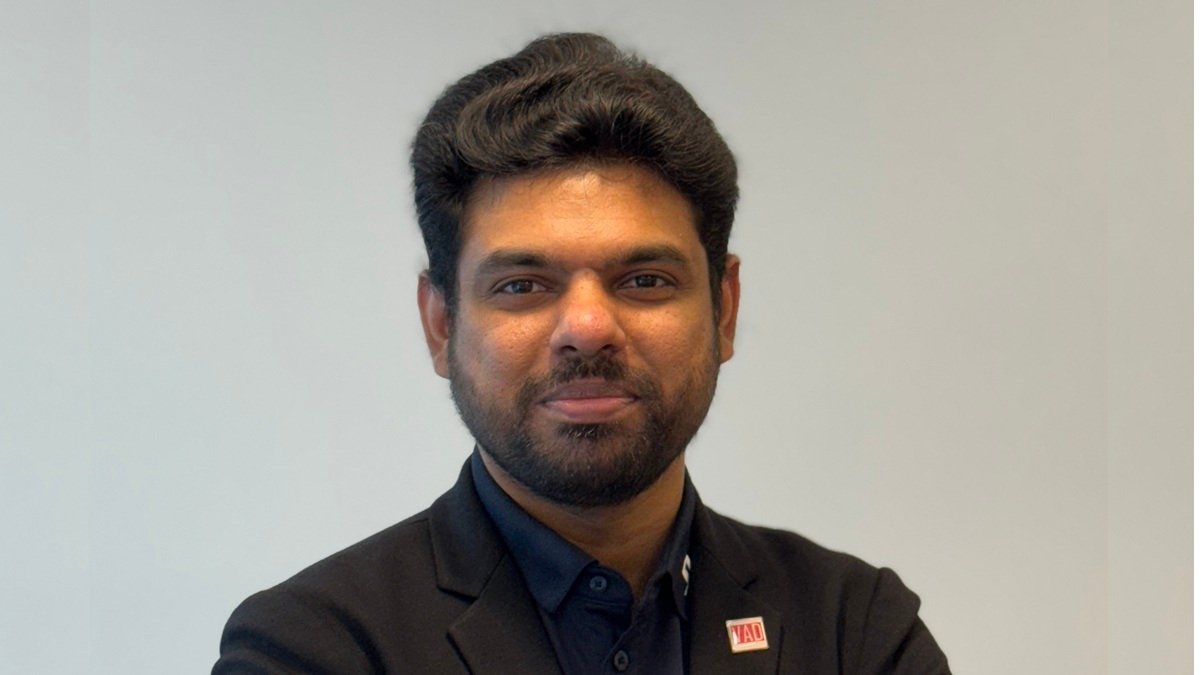
At VAD Technologies, the Product Manager for Cybersecurity, Shahsin Shafeek P V, echoes the sentiment, adding a human dimension to the technology. “Equipping organisations with AI-driven platforms is only half the battle,” he says. “We also provide advisory services, training, and hands-on support to ensure that these tools are understood and applied effectively.” Shafeek describes teams working side-by-side with clients to simulate attack scenarios, refine automated responses, and optimise security policies for each organisation’s unique environment. “Cybersecurity isn’t just about technology—it’s about access, education, and scale,” he stresses. In practice, this means turning sophisticated platforms into actionable defences that can be managed confidently, even in highly distributed or resource-constrained organisations.
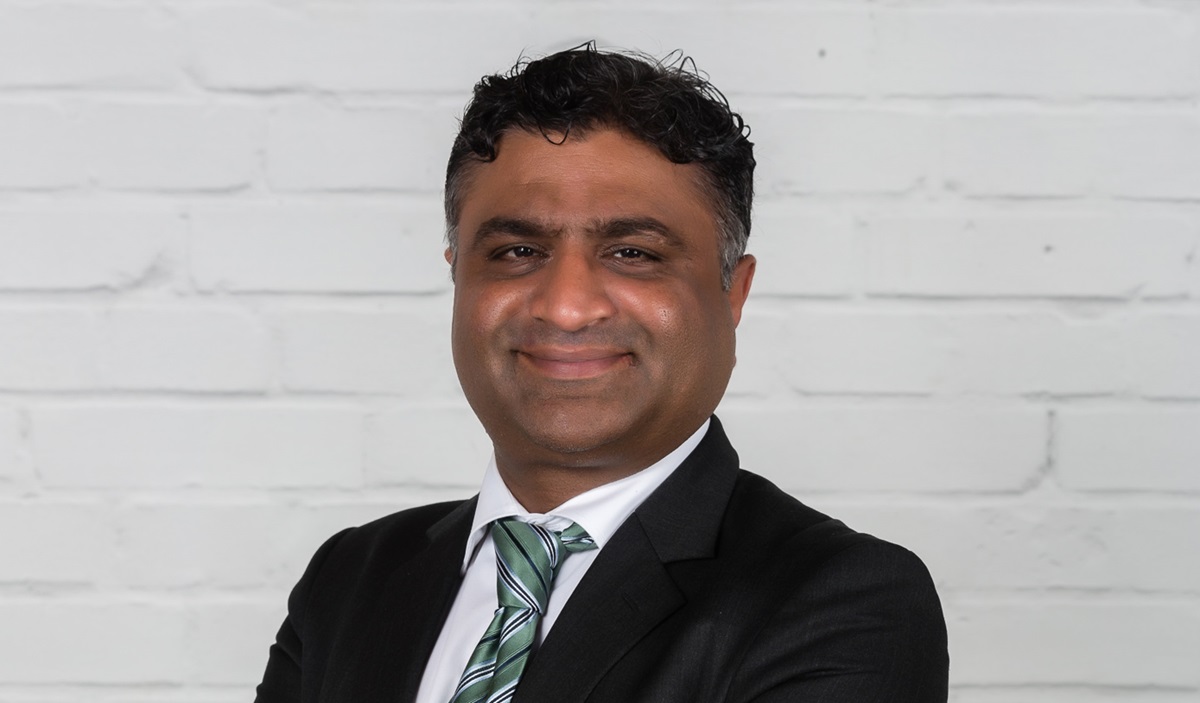
Bilal Baig, Chief Technical Officer for the Mediterranean, Middle East, and Africa at Trend Micro, describes cybersecurity as a high-stakes, constantly evolving chess match. He explains how Trend Micro’s Vision One platform centralises risk management, security operations, and threat response into a single AI-driven framework, giving enterprises complete visibility across complex hybrid networks. At its core, the Cybertron engine predicts and prevents attacks, drawing on decades of global threat intelligence and insights from diverse industries.
Baig recounts instances where subtle anomalies in network behaviour—barely perceptible to human operators—served as early warning signs of coordinated attacks. Automated responses neutralised these threats before they could escalate. “It’s not just about reacting,” he says. “It’s about outpacing adversaries, staying ahead of evolving threats, and empowering organisations to innovate securely.” For Baig, predictive intelligence transforms cybersecurity from a defensive necessity into a strategic advantage, enabling enterprises to pursue digital transformation with confidence.
Taken together, these voices paint a picture of a region that understands the urgency of the challenge but also sees an opportunity. The Middle East is not just catching up to global cybersecurity standards—it has the potential to lead them. With governments investing in digital-first economies, enterprises modernising infrastructure, and vendors embedding AI at every layer of defence, the building blocks are already in place.
For the region, the story is as much about possibility as it is about peril. AI is rewriting the rules of cyber warfare, but it is also providing defenders with the sharpest tools they have ever had. If the Middle East can blend innovation, collaboration, and vigilance, it won’t just secure its digital future—it will shape the next chapter of global cybersecurity leadership.